Skip navigation

Pro Bono Australia publishes the Guide to Giving, Australia’s directory of Charities and Not for Profit Organisations.

They are Australia’s leading online News Service for the Not for Profit Sector, along with charity jobs and volunteer opportunities, events, and a directory of specialist suppliers for charities.

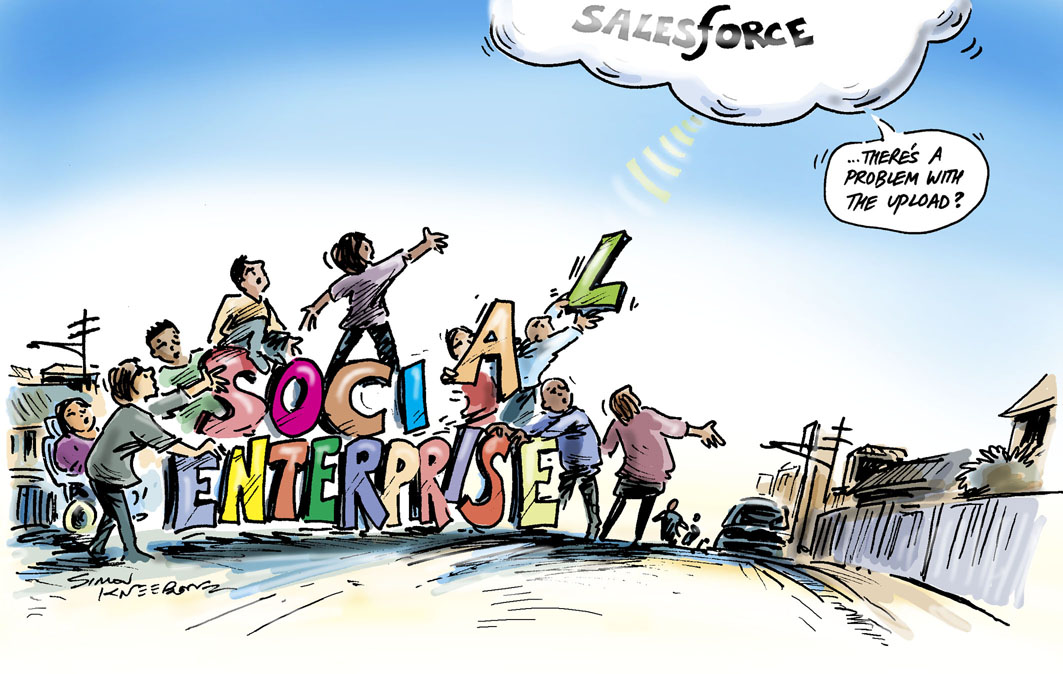
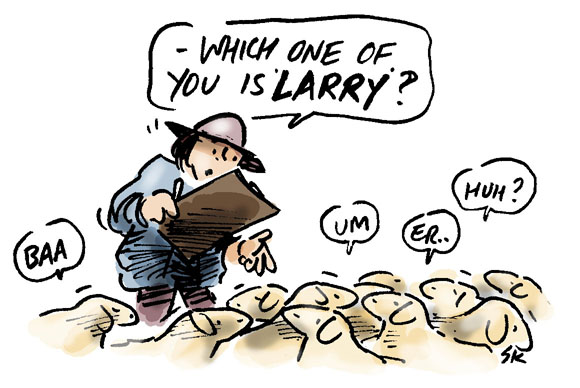
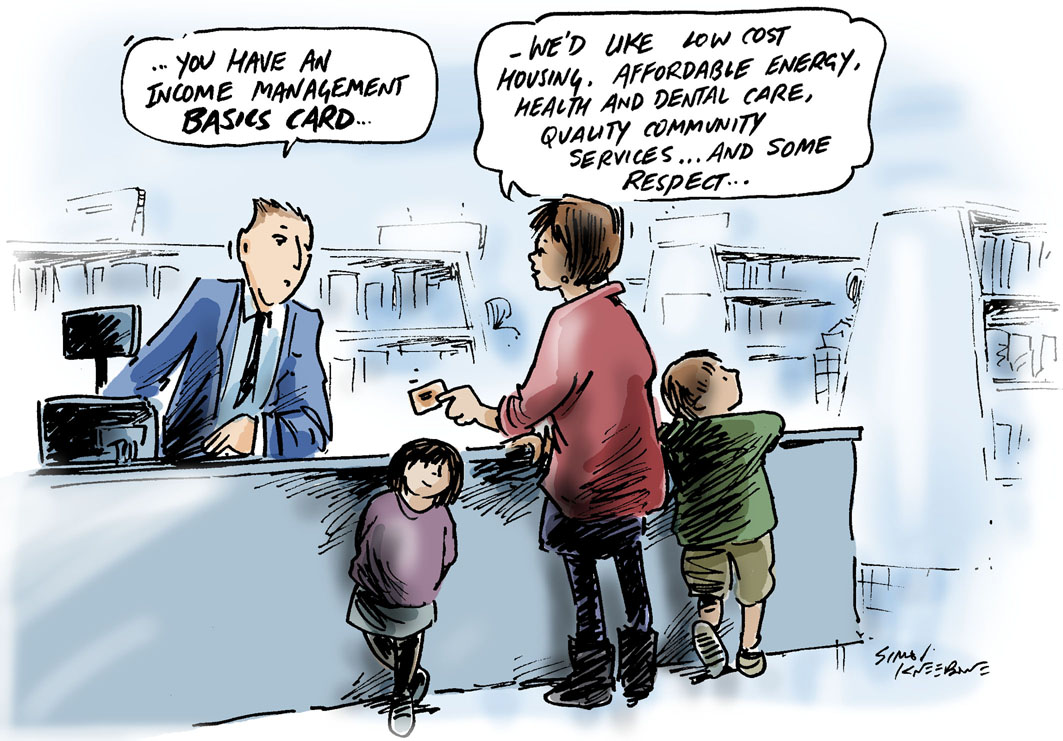
Pro Bono News has a weekly Kneebone cartoon take on an aspect of the Not For Profit sector. Click on the NFP Kneebone panel on the Pro Bono news page (or on the one below) to see this week’s cartoon.

Here are a couple of earlier cartoons:

Here is a selection of cartoons from the latest Issues books published by Independence Educational Publishers, Cambridge UK.  Six books are published each (UK) school term, for students 14 years and above.

The present  Issues topics are: environment, class, population, gender, tourism and crime.

Population issues

Class issues

Gender issues

Environment issues

Environment issues


John McKenna is a disability commentator whose weekly blog highlights a disability issue that has grabbed his attention.

This week he reports on attending the wheelchair tennis at the Australian Open 2012. A purpose-built platform was provided for wheelchair users to view the matches.  Unfortunately it did not have any shelter. There was shade for those who could negotiate the stairs up into the stands. It is summer in Australia and it can get pretty hot sitting out in the sun.

To read John’s post – and see all of his posts, click here.

The January/February issue of New Internationalist  is in the newsagents.

Here is my  Scratchy Lines cartoon, which appears on the Letters page:

The latest issue of Australian Options is out. To subscribe click here.

Below is a cartoon drawn to illustrate one of the articles in this issue: ‘Policy in the wake of the banking crisis: taking pluralism seriously’ by Sheila Dow.

As the article states ‘There is a limit to how far economists can understand a complex reality, far less predict the future. But fostering a range of perspectives and analytical methods would make economics much more robust in the face of unexpected developments …’

Health SA’s Tobacco and Mental Illness Project has produced many resources for people with a mental illness – who are more likely to smoke, and smoke more heavily than the general population. For example a study has reported that 60% of people with schizophrenia smoke.

More information and links to some of the resources can be found at: http://www.quitsa.org.au/aspx/mental_health.aspx

and details of the Project at:

http://www.quitsa.org.au/aspx/quit_sa_programs.aspx#6

The resources have used cartoons and graphics to help explain the project’s aims of awareness, practice change and reduction. Cartoons can (I hope!) connect with a reader, empathise, and help them through the text.

Here are some examples.


Stages of Change

The Melbourne branch of the School for Social Entrepreneurs  http://www.sse.org.au/  had the evaluation of their 2011 program on November 24th. The 16 participants reflected and shared significant stories with the help of a History Trip Activity.

I was there to illustrate some of the stories in cartoons.

The photographs show the History Trip spreading across the wall, along with stories, notes, jottings and cartoons – a visualisation of the participants’ 2011 experiences.

Below are a few of the cartoons.


Unfortunately there isn’t a solution to the Konigsberg Bridge Puzzle. Such is life, there isn’t  always a neat resolution, or one right answer.

Andrew Rixon of Babelfish Group  http://www.babelfishgroup.com got me to draw the puzzle for a section of his book Complex Systems: thriving in complexity.

So, if you could cope with having the puzzle in your head for  a few hours (or a couple of days in my case) and eventually realising that there was no solution, well, maybe we all are better prepared for other stuff that doesn’t resolve itself neatly. Or maybe not….

Why people keep fish in aquariums QED


Independence Educational Publishers, based in Cambridge, publish resource books on social issues for students. Cartoons are a feature of each issue – usually 15-16 in each book. Three of the four regular cartoonists are Australian: Bev Aisbett, Don Hatcher and me. What does that say?

The Independence website is: http://www.independence.co.uk/

Here are three of my cartoons for the recent Vegetarianism issue.